Karan Gokani first launched Hoppers in Soho ten years ago. Now he's getting ready to open up the fourth Hoppers in Shoreditch. But this time he's doing things a little differently, bringing in some new South Indian influences. We caught up with him to find out what's being planned for Shoreditch.
When the original Hoppers opened, the focus was very much on Sri Lankan cuisine.
When we opened 10 years ago, we've always said we were Sri Lankan and South Indian. I think weirdly, all the press at that point had heard enough about Indian restaurants, and I think when they heard South, they still only heard Indian. And they felt that this Sri Lankan place was very novel.
Obviously, for us, a huge part of the intention was to celebrate Sri Lanka. Personally, I felt that there were great similarities, yet amazing differences between the cuisines - they could really sit side by side on a menu. And that's why we came up with our menu with inspiration from both countries.
Then all the press came out and they were all "Sri Lankan restaurant, Sri Lankan restaurant" and that went on for a while.
But you're not Sri Lankan yourself?
Weirdly, I found myself in a place where I'm sort of seen as a Sri Lankan chef, which is not completely true because I'm not Sri Lankan to begin with. I'm Indian. I grew up in India. But I'm extremely proud of the fact that I came to represent this country that has kind of adopted me, has given me an identity and where I've got probably more friends today than anywhere else. So I'm madly in love with the country, and we're very, very grateful as well as honoured to be flag bearers of it.
When you think of an established dining scene in places like London, New York, the larger cities, it's very rare that you find someone from a different nationality representing a cuisine or without the ethnicity, even if it's Angela Hartnett, who's got Italian blood doing Italian food.
At the time (we opened Hoppers), there were restaurants sort of trying to pass off as Sri Lankan, and there's, you know, old school Sri Lankan restaurants since 10 years ago, but no one was doing it in a way where I want to take my friends, take my family, go again, and again, and eat a level in sort of style of food that just wasn't available. So we created that.
Now you're shifting things again, including more South Indian influences?
Ten years on, the majority of my team in the kitchen is South Indian, from Kerala, Tamil Nadu, and some other regions. We've been travelling a lot, obviously in Sri Lanka, but also the rest of India and I've been researching this region for a long, long time.
So we've had a lot of dishes trialled on our menu and have done really well. They sit really well alongside our existing dishes. We again want to represent a cuisine, truly represent a cuisine. We are very proud of being flag bearers in representing regional food. We've done that with Sri Lanka. We love to do that with South Indian food, because there are restaurants out there that claim to be, profess to be, but they're still doing North Indian food, still doing tandoori food, a pan Indian menu.
When you go into South India, it's as big as a continent in itself. Forget about the rest of India. You go east to west, the cuisine changes dramatically, and the language changes completely. It's not the same. We want to try and shed a little bit of light on that. And I think, purely selfishly, these are dishes that I love eating. I go to India at least twice a year. I've got all my family in Mumbai. I'm seeing certain dishes really blow up over there and thinking, "Why the hell aren't we getting them here? Let's do it ourselves".
Can you give us some examples?
So the benne dosa, for example, is a dish we're bringing here. It's a Bangalore-style dosa. A lot of the dosas (in London) are Tamil style, but Indian Tamil. It's the same difference as bread. Bread from different regions or pancakes from different regions can be completely different.
You go across India right now and you'll see the benne dosa, this huge craze. Bombay has it now. Delhi is getting it now. Everyone's talking about the benne. It literally translates as white butter. So this is a slightly different batter. The effect of the dosa is a little different. You got like a lovely shiny outside, very buttery, crispy, it's almost deep fried on the outside because the amount of butter they use and then it's nice and soft on the inside.
It's folded like a taco and normally just served with a potato masala or plain. But I thought, why don't we just do it with another dish? So we're doing a paneer ghee roast, and we're also doing a lamb version because I think it's such a good fit. It just made sense. It fits really well with our menu.
It sounds like you've really put the work in.
We went and did the research. I took some of my top team to Bangalore. We ate the best dosas out there. We've spoken to people on the ground and we've been developing, developing, developing. It's still not 100%. But it will be by the time people come in.
But it's not just Bangalore.
We're also doing this thing called the Dindigul biryani, which is from a region called Dindigul, near Chennai. Biryani is a dish I've loved all my life and again, the nuances and subtleties and differences between the biryanis you'll get in different parts of South India and Sri Lanka are humungous. So, until now, we purposely chose to be different because, you know, you've got the lovely royal Lucknow biryanis and Hyderabad biryanis in restaurants like Gymkhana.
In lots of the Indian restaurants, a biryani is very, you know, commonplace, but for that reason, we originally chose the Sri Lankan buriani, which is, you know, spelt a little differently. It's not a typo on our menu. We celebrated that on our menu, which is a little different from the other biryanis. Anyone who knows the subtleties will tell.
And now we wanted to go even further out because, again, it's sort of a false notion that a biryani has to be long-grain rice, very aromatic, with rose water and saffron. I think South Indians do these lovely, flavour-packed, rich, spicy biryani, but they use a short grain rice.
There are two things to that. One is from a sustainability point of view, you shouldn't just be eating basmati. We should be eating different kinds of rice. But this is not a sustainability story. This is more that there can be really tasty variations of dishes, which are just not celebrated because it's not easy to do that.
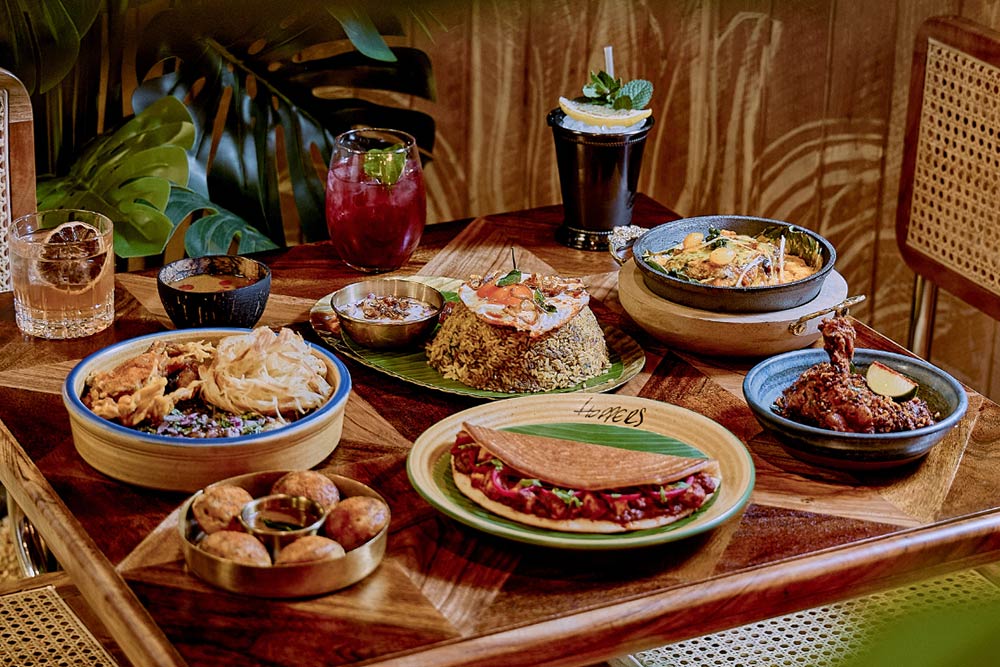
Everyone knows that biryani is going to sell, so they sell it. No one's going to put their money behind doing a different versions, but I was very keen having already tried that (with the Sri Lankan version). We went to the team, we tried it again. We loved it agreed that we need to bring this dish here. So interestingly, we've got both sitting side by side. We've got the original buriani, and the South Indian style (Dindigul Short-Rib Beef Biryani). We've got a nice fried egg on top with a tarka, and we've got some onions. I think the dishes work really well.
Any other influences?
We've got two dishes from Kerala. My exec chef, Renjith, is from there and he's been a huge part of the Hoppers story. He developed the whole brand with me. He's like family to me and he said, "I want to add some more dishes that I've loved from Kerala". So we're doing an incredible fried chicken (Chilli Chicken Chop). We also have a really nice fish dish and we're using salmon this time as we want to show that you can do a really nice curry with salmon (Sizzling Salmon Mappas).
Finally, the other influence is Madurai. It's a city which I think is one of the most underrated food cities in South India. They do the best street food. I think I've ever eaten. It's just the culture; the street food is wild. When you get to the food at late at night, you forget everything that's around you. There we ate an incredible crab curry at lunch. We had this omelette that I haven't been able to forget. Then there are the parottas that they do; the rotis are incredible. So we've actually brought all three together in this sort of crab curry omelette, with some flaky thread parathas (Crab Kari Omelette).
And how have you approached the new site?
We were hugely inspired by Chettinad, which is this magical region known for its food in Tamil Nadu. There, we had a bunch of different dishes, but the biggest thing was that the decoration of the new restaurant has taken a lot of inspiration from the homes there.
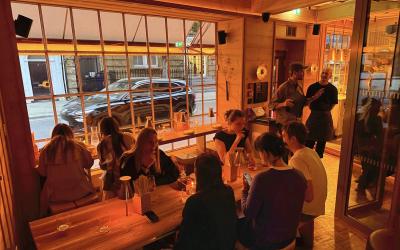
It's a tiny site, as you might remember from Lyle's but we've given it a nice makeover. You won't recognise it when you come in. There are a lot of influences from Chettiyar homes, which also interestingly, just sit within that Hopper's language which itself works really well with South Indian influences. So we've got South Indian artefacts and masks, but we've got classic decor from Hoppers.
It sounds like you're quite excited about the opening
I don't think I've been more excited about a restaurant opening because I think there's been so many learnings. Designing, conceptualising and even working on the menu, but also most importantly, I think our team is stronger than it's ever been. I've got the most incredible people. I'm so proud to work with them. It's really been enjoyable opening the site.
Hoppers Shoreditch opens on 4 February 2026.
See also

More about Hoppers Shoreditch
Where is it? Tea Building, 56 Shoreditch High Street, London E1 6JJ
When? 4 February 2026
How to book: Book here
Find out more: Visit their website or follow them on Instagram @HoppersLondon.
Subscribe to be the first to get the news from Hot Dinners